version française
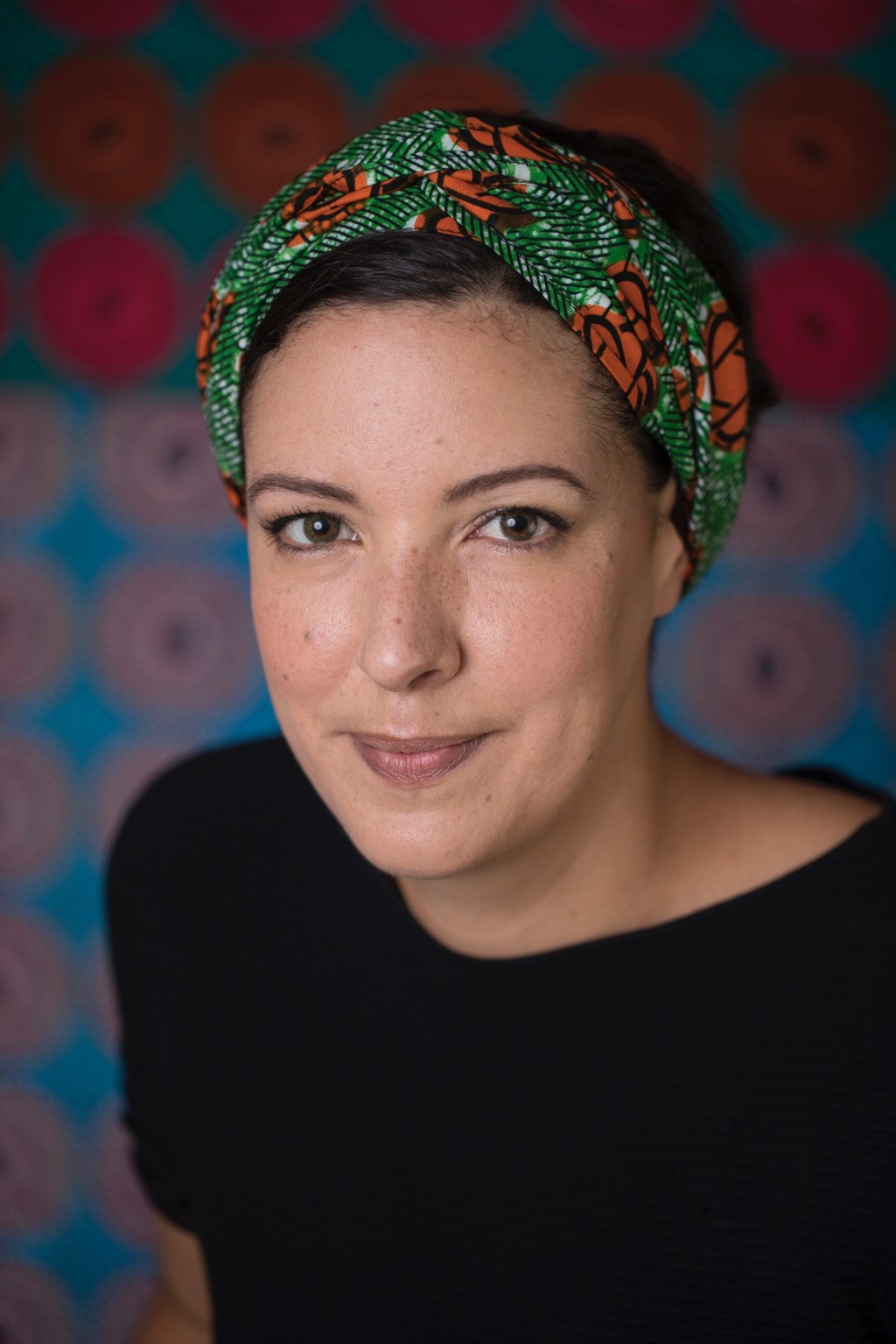
For almost 20 years, the Zinsou Foundation has set itself the mission of enabling the African continent and Benin to appropriate the incredible wealth of its contemporary creation. A project that could not have seen the light of day without the audacity and pugnacity of Marie-Cécile Zinsou.
The deep roots of Benin are intertwined with the history of Marie-Cécile’s family, whose great uncle was ambassador to France then president of the Republic of Dahomey (1968-1969) before becoming one of the main opponents of the Marxist-Leninist regime of General Kérékou. A political commitment which forced him, as well as his family, to go into exile in France in the mid-1970s. This deep attachment to public service is found in Lionel Zinsou, Marie-Cécile’s father, who became Prime Minister of Benin in 2015.
Added to this family heritage was a particular importance given to education when Marie-Cécile’s great-grandfather became a teacher in one of the first schools in the region at the end of the 19th century. Marie-Cécile’s mother is also a French teacher.
Marie-Cécile brings with her this incredible legacy when she decides, of her own accord, to leave France for Benin in 2003. A rash decision when we know that General Kérékou is still in power. But no matter, Marie-Cécile left to join the SOS Children’s Village association before starting teaching English and Art history to young Beninese people. But how can we teach them Art history when there is no museum in the region and the only History of Art at disposal is deeply centered on Europe and the United States?
It was in 2004 that Germain Viatte, who would become general director of the future Quai Branly museum, gave him a crazy idea: “find a warehouse, take a sign, write “Museum” on it, put it on the door, go for it and you’ll see”… challenge accepted.
For the first exhibition in this new space, Marie-Cécile wants to make a strong statement by exhibiting the work of Romuald Hazoumé, one of the most renowned visual artists in Benin. The artist was impressed by Marie-Cécile’s boldness. In 2005, Romuald Hazoumé presented, not without pride, in the new foundation.
- You come from a family of teachers, you taught Art history in Benin. Also, your foundation publishes books, sets up libraries and welcomes schoolchildren all year long. Is the desire to share knowledge in the DNA of the Zinsou foundation?
{MCZ} : In 2005 I created the foundation because I wanted to allow Africa to look at itself. This may seem a little ambitious, but I realized that African contemporary artists are celebrated in New York, Paris, London or Tokyo but not on their own continent. As if Africa had to export all the best things and only keep its problems for itself. So the main purpose of the foundation is to give Africans access to the incredible diversity of contemporary Art. There are certainly events like the Dakar Biennale, but where can we see Art, the rest of the year?
Concerning the educational aspect of the project, the idea is that children can benefit from being introduced to Art. This is what the foundation works for through exhibitions, organizing workshops or providing libraries.
When you are in a somewhat strict education system, the museum can be a space for dialogue where you come with your school or alone. A space where you can ask questions and give your opinion. I find it extremely important for the intellectual development of a child. It’s a museum that children come to after school on their own. Sometimes they bring their parents.
When I created the foundation, it was with the idea that with globalization we were going to ask the same level of skills from someone coming from Europe, China or Benin without offering them the same access to culture and knowledge.
- The foundation supports the people of Cotonou and Benin in their journey to reclaim their history, their present through contemporary creation and their future through education. Beyond its international influence, is the foundation above all a local player?
{MCZ} : I think it’s the other way around: it’s a local project that has the chance to have international recognition. This is the reason why we decided to introduce ourselves to the local population. We have produced small transportable exhibitions which we have placed in the town squares and in neighboring towns. A way to say: “this is what we do, this is who we are”. We can’t be surprised that people don’t come to see contemporary Art exhibitions if they never had the opportunity. First visitors were simply curious people who pushed the door of the foundation to ask us who we were. They understood our approach and shared it with people around them.
The idea of the foundation is to present to the Beninese what is happening today and allow them to look at our time through the eyes of artists. It confronts them with something very close and at the same time completely new. Take Romuald Hazoumé, for instance: whether you are from Porto Novo, Abomey or Cotonou, you will feel very close to what you see and at the same time what you experience can completely overwhelm you.
Since 2007, the foundation has set up a residency program which offers artists from all over the world the opportunity to come to Benin. An opportunity to exchange, share and develop an artistic project with the material and human support of the foundation.
- The foundation is also an open window to the world. What are the artists in residence looking for? What do they bring in return?
{MCZ} : After a while, we realized that many artists wanted to come to Benin. So we launched a residency program. At the beginning we received artists from Nigeria, Congo-Brazzaville and then very quickly artists from Japan, France… Benin is an exciting country.
In 2016, the foundation decided to expand on a field next to the Ouidah museum, in order to exhibit a selection of contemporary monumental works. This land, abandoned to nature, turns out to be an archaeological and biological sanctuary. The Abomey Calavi archaeological department and the National Herbarium have identified stones belonging to the Czechs civilization as well as vegetation testifying to a meteorological phenomenon that occurred 4,500 years ago: the Dahomay Gap.
- We often talk about the villa Ajavon; but more rarely from the garden which spreads over 6 hectares. Can you tell us about the project?
{MCZ} : It was a complete surprise for us. We thought we were taking advantage of an abandoned land to launch new projects and it turns out that it is an exceptional site! We had a visit from the archaeological department of Abomey Calavi and the National Herbarium which confirmed that we were in the presence of an exceptional site. From there, we no longer had a choice: we took the decision to invite artists to do projects in the garden and we will open it to the public. We are trying to find sponsors to support the project at the moment. It was a funny situation because we were facing a random abandoned field and suddenly we had to consider how it should be preserved and who should be the curator of the land. But that was not planned at all. It was a big surprise.
In 2021, Mo.Co Montpellier is honoring the Zinsou collection through the exhibition of 110 works presented around the work of the Beninese painter Cyprien Tokoudagba (1939-2012).
- The exhibition at Mo.Co was a real success. Do you think this could inspire other institutions to develop this type of project?
{MCZ} : Doing partnerships with African institutions is still not a common thing for western museums. But mentalities are changing and we feel a certain curiosity: we have requests from the United States, exhibition financing in France and a whole bunch of very different projects. But the way things are done are so different from one country to another that it is quite difficult to provide a global answer to those opportunities. I am happy to announce that the exhibition will soon be presented at the Cobra Museum.
- African Contemporary Art has (finally) the honors of the media. Talking about African contemporary Art as a whole: is it a way to give more visibility to the continent ? Or do we risk missing out on the specificities of each region ?
{MCZ} : This raises a question that goes far beyond contemporary Art and that deals with the way that Africa is seen by the western world. At least, when it comes to Art, Africa benefits from a certain recognition. At least on that matter we are not considered as being bottom of the class.
When it comes to ancient African Art, it is another story: we are still approaching it based on a scale of values established by Europeans at the beginning of the 20th century. Today, the market value of ancient African Art is totally uncorrelated from the cultural importance brought by the local communities.
For many years you have been actively advocating for the restitution of African looted Art, seized by Europeans at the end of the 19th century and now exhibited in major Western museums. How could Benin and the other countries of the region write their own history without the physical testimony of their past?
The process started in 2006 when president Chirac announced to the president of Benin that France would lend works from its national collection related to the King of Dahomey. Those works should be exhibited in Benin to celebrate the 100th anniversary of King Béhanzin. >> The French president made his point very clear: the works should be exhibited in Bénin before the end of the year, despite the reluctance of French curators for whom organizing an exhibition in six months was truly unthinkable. This raises the question of where the exhibition should be held. Marie-Cécile foundation in Cotonou seems to be the perfect spot. Completed challenge: the exhibition opens its doors the same year and the success is undeniable: 275,000 visitors in three months… Still, the permanent return of the work in Bénin is out of the question.
The historical turning point will come when on November 28th, 2017 president Macron announces in Ouagadougou that he “cannot accept that a large part of the cultural heritage of several African countries is held in France” and that he wishes that “within five years, the conditions are met for temporary or permanent restitution of African heritage in Africa”. A report by Bénédicte Savoy and Felwine Sarr shows that 85 to 90% of African heritage is to be found outside of the continent. On December 24th, 2020, a law authorized the return of 26 objects from the treasures of Abomey. The French government is now working to settle a permanent legal framework for that type of procedure.
- You support the return of looted artifacts to Africa. A major movement was launched by Emmanuel Macron and France. Germany now has a very proactive attitude. Scotland and Switzerland are catching up… Can we be satisfied with the progress made in recent years?
{MCZ} : What happened in Ouagadougou is unique and no one has done it before. It was something I wouldn’t dare to dream of. I had already been grateful to President Chirac when he said that “people in Benin must see the heritage of Dahomey » but I am just as grateful to President Macron for having claimed that “the African heritage must return to Africa”.
When we did the exhibition in 2006, I thought to myself that it was a historic moment. A French president realizes that Africa exists and should be taken into consideration. That Benin had no obligation to pay for a war that our ancestors lost by having all subsequent generations deprived of their heritage. I found it incredible that Jacques Chirac had this crazy idea: “what if we lent to African countries some of their most significant artifacts?”. French curators were at first very skeptical. For my part, I made myself available to both countries (Benin and France). I made sure that the exhibition was a success and served as an example for the future.
President Macron’s speech in Ouagadougou was another historic moment. Of course, we now need a more sustainable legal framework. Several technical points have to be discussed but it will be easier now that the process has started. In France, no reform is made without a certain amount of protest. But despite everything, Benin has shown a wonderful example.
The question of restitution is a fascinating topic and a real challenge for our generation. This is a much broader subject than what we hear in the French media. It is very interesting to see how dialogue is established between countries. In any case, it is a source of pride to know that the movement started from France. Today this issue is on the agenda of all African countries. This is an issue that deserves their attention, whether or not they decide to initiate a restitution process.
I would like to take this opportunity to mention an announcement that has been a bit overshadowed by the Ouagadougou speech during President Macron’s visit to Benin: we are going to welcome a new kind of Villa Médicis in Benin. It will not be a spin-off of the Roman institution and the place will have its own identity. It will be a place of French excellence. As a Franco-Beninese, I am proud of it.
- You are now the director of the board for the Villa Medicis. The institution seeks a balance between preserving heritage and promoting contemporary creativity. A refurnishing project is underway (2022-2025). What can you say about your experience at the Villa Médicis, so far?
{MCZ} : The first year was quite special. It mainly consisted of understanding how the institution worked and supporting Sam Stourdé. He is someone who has a strong impact, who thinks about the institution differently and who knows enough about the Villa that (he was a former resident). In short, he knows what he is talking about.
At the moment, my role is to stand by Sam’s side in the project of re-enchanting the Villa Medicis. What he has undertaken is incredible and what he has accomplished over the past six months is fantastic. The project is as strong as that of Baltus 60 years ago with a total respect for what has been done in the past.
I have the honor of now being part of the jury that selects the residents. Something that wasn’t really done before. But I don’t have an active role on a daily basis.
We don’t really have an acquisition budget, but we are trying to enrich the Art History Department by receiving donations.
 Ink & Voices