
version française
The Monaco Grand Prix, an absolute myth. Since 1929, the now 3.337 km and 19 most famous corners in the world have been the scene of some of the greatest moments in motorsport: the battle between Stirling Moss and Alberto Ascari in 1955, which ended in the harbor after the Italian driver went off the road; the Prost/Senna epic battle in 1988, then Mansell/Senna in 1992, won by the Brazilian by 215 hundredths… How to list them all?
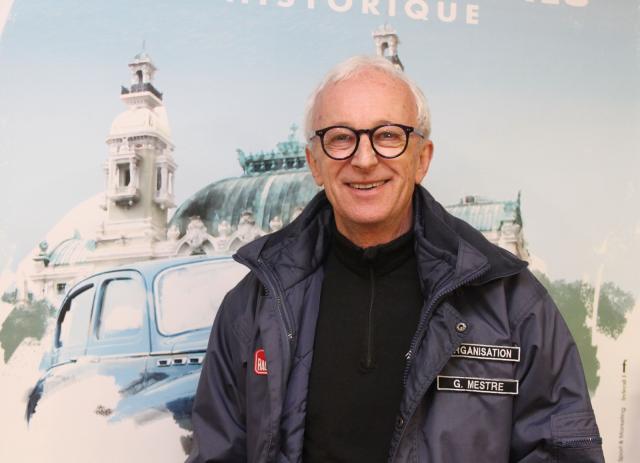
A fabulous heritage that the Historic Grand Prix, created in 1997, celebrates every two years. Museums do a fantastic job in preserving precious cars, but in Monaco we believe that cars are made to be driven… and fast, if possible. We spoke with Géry Mestre, Chairman of the Classic Car Commission of the Automobile Club de Monaco, which organizes the event.
- Géry, what is the origin of the Historic Grand Prix? As the Chairman of the Commission, how do you explain its success?
{GM} : In 1997, we organized our first Historic Grand Prix to celebrate the 700th anniversary of the reign of the Grimaldi family. It was supposed to be a one-off but Prince Rainier liked it. So we decided to make it happen every two years. This rhythm allows us to organize the Grand Prix in the best conditions possible and maintain a certain level of expectation among spectators. Who knows whether we’d be able to get the same level of enthusiasm if it were held every year? Be that as it may, the Historic Grand Prix is only held because the F1 Grand Prix makes this legendary circuit available to us.
I do have the title of President of the Classic Car Commission, but the organization of the Grand Prix is only possible thanks to the tremendous work of the whole team. I share the success of the Historic Grand Prix with all the other members of the Automobile Club who work so hard for the event.
- The purpose of the Historic Grand Prix is to enable spectators to discover or rediscover the cars that have made Monaco legendary. For the drivers, it’s a question of having fun while preserving the cars. But at the end of the day it’s still a race. Is it important for the Grand Prix to maintain this competitive atmosphere?
{GM} : The Historic Grand Prix is definitely a race and that’s one of the main reasons why people are so passionate.
I’ve had the opportunity to organize all sorts of car events and I can tell you : a parade is one thing, a race is another. First and foremost, there’s the question of drivers: just because anyone can buy a classic car doesn’t mean he is a pilot. Those who raced here can confirm that the circuit is extremely difficult and demanding. So you need to have a real track record to be able to take part in the Historic Grand Prix.
We want spectators to experience the competitive atmosphere of a race. We also attach great importance to the fact that the cars are in their original condition, with a clear provenance. But the more a race car has driven, the more likely it has been involved in an accident. So, we do accept that some car parts may have been replaced.
Also, race cars’ equipment and settings are very different from those from a classic car meant to attend a parade or a beauty contest. Whether in terms of tyres, suspensions or brakes.
- Participating in the Grand Prix is by invitation only. What is the profile of a Historic GP driver?
{GM} : There is no typical profile, but he has to be qualified and athletic. I would add that it’s not necessarily a question of age: we have drivers of all generations. The older drivers aren’t always the fastest, but they have more experience. Some are former drivers. Sometimes it’s a professional driver who races on behalf of the car owner who feels he is not experienced enough.
- The Grand Prix gathers cars of different categories from 1929 to 1985. Will these categories change in the years to come?
{GM} : It’s hard to say. The public wants GP cars, especially Formula 1s.
At some point we wanted to withdraw the pre-war cars because we felt they were dangerous, hard to find and difficult to drive. But the competitors told us how attached they are to this category. Therefore, We’re trying to find a way to keep them.
The Historic Grand Prix organization is complex. Complex… but exciting. Our place and our time are limited because it’s a street race. So we had to make choices. Particularly when it comes to parades: we don’t really do them any more due to a lack of time. We don’t have much space to park the cars either.
- Prominent companies such as Bugatti, Ferrari, Lotus and Mercedes are celebrated during the event. Do they support you?
{GM} : I wouldn’t go as far: they are not sponsors. But it’s true that those companies are very active when it comes to celebrating their own heritage during classic cars shows such as Rétromobile (Paris), Techno Classica (Essen) or Auto e Moto d’Epoca (Bologna) and all the events happening in the United States.
Why? Because every company used to have its own identity. We could tell a Jaguar from a Mercedes. Nowadays, cars all look the same. So today’s brands invest a lot in communication around their classic cars. This is a way for them to differentiate themselves.
- Some former Formula 1 pilots regularly take part in the Historic Grand Prix (Mika Hakkinen, René Arnoux, Thierry Boutsen…) but there are also drivers who are still active, such as Charles Leclerc. Does the event attract current teams and drivers?
{GM} : Charles Leclerc did a few laps, but he didn’t take part in the Grand Prix. Obviously, the stakes aren’t as high as in a real Grand Prix, but our races are nonetheless real motor sports competitions and as such they remain dangerous. The F1 drivers are therefore not allowed to take part in the Historic Grand Prix.
Today’s drivers are immensely talented. But there’s something special about driving these old cars: they don’t have power steering and they have mechanical gearboxes.
- What do you think has changed most in Formula 1 over the last few decades?
{GM} : The explosion in the teams’ budgets. In my opinion, this shows the importance of Formula 1 in the media. For manufacturers and sponsors, F1 remains one of the best marketing opportunities.
- What experience have you drawn from previous editions? What would you like to develop?
{GM} : We constantly have new ideas that we would like to develop. Unfortunately, we are constrained by space and time. We used to have Junior and Formula 3 races, but that’s not what the public wants. Motor racing is first and foremost a show and we want to give what the public wants to see.
We’re delighted to see the Juniors and F3s racing: they are talented drivers with a fighting spirit. This often leads to great battles. But the public wants more spectacular cars that they dreamt of when being kids.
- In current Formula 1, the spectator is…a spectator. But at the Historic Grand Prix, the spectator seems to have an active role to play. Some people are real connoisseurs and help the Historic Grand Prix to preserve its heritage. Do you feeI this is the case?
{GM} : Many of our spectators only come for the Historic Grand Prix. Unlike modern F1, you can go down into the paddocks, see the drivers up close and talk to the mechanics. That’s something you just can’t do these days.
The Historic GP is an intense event, but it’s still not as fast as today’s Formula 1. It gives spectators time to see the drivers and their cars.
- Finally, what is the moment of the Historic Grand Prix that stands out the most for you and which, in your opinion, best represents the spirit of the event?
{GM} : When you put two great drivers together at the Historic Grand Prix, it makes for some magnificent battles. That was the case in 2021 between Jean Alesi and Marco Werner.
 Ink & Voices