
The Lucas Museum of Narrative Art, founded by filmmaker George Lucas and his wife, American businesswoman Mellody Hobson, is a cultural institution dedicated to celebrating narrative art. Located in Los Angeles, California, the museum will showcase a vast selection of art that spans a range of mediums, including paintings, illustrations, photography, and cinematic pieces in an incredible 300,000 square foot building. The museum’s mission is to explore the power of visual storytelling across various cultures and historical periods, making it a unique and immersive experience for visitors interested in the intersection of art, narrative, and mass-produced media.
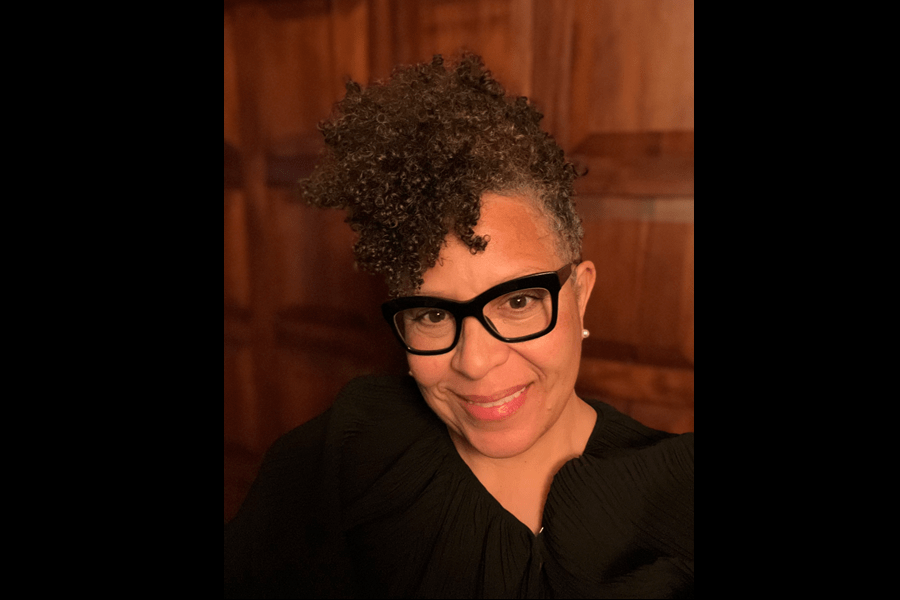
In 2020, Sandra Jackson-Dumont was appointed as Director and CEO of the Lucas Museum. To accomplish the museum’s mission, Sandra calls on more than 25 years of experience in major institutions such as the Seattle Museum of Art, Whitney Museum, the Studio Museum in Harlem, and the Metropolitan Museum of Art.
- The museum is currently under construction. Do you have an idea of the inauguration date?
{S.J-D}: 2025. We look forward to announcing more information as we get closer to the opening.
- Do you have the intention to play an active role in the neighborhood and the local community ?
{S.J-D} : Yes! Let me tell you a little bit about the community we are located in. We are part of the wonderful Exposition Park neighborhood and enjoy the company of other important cultural institutions including the California Science Center, the Natural History Museum, and the California African American Museum. The Los Angeles Memorial Coliseum, one of the main venues for the 1932 and 1984 Olympics, and BMO stadium, home of the L.A.F.C. and Angel City soccer teams and the Rose Garden are also here. The surrounding local community is already incredibly dynamic, and we are proud to be part of the future and continued vibrancy of South Los Angeles. The Lucas Museum’s campus is being built on a site that was formerly asphalt parking lots, so we are very excited to bring not just the museum, but beautiful new green space to the area. More broadly, we are looking forward to creating a place for all to call their own, whether they live and/or work in the neighborhood, in greater Southern California, or if they are visiting Los Angeles.
In terms of local engagement and impact, there is the obvious economic one—right now, we are creating a wide range of jobs on the construction site; in the future there be will many employment opportunities from front-line visitor experience positions in areas of hospitality and retail to specialized museum professionals.
We take very seriously our commitment to education. The community around the museum includes 501 schools in a 5-mile radius. That’s an incredible opportunity! We also are in conversations with various colleagues at the University of Southern California, our neighbor to the north. As an institution dedicated to narrative art, and as an institution with an incredible new and innovative building, we have so many opportunities to work with an array of disciplines including art history, material culture, literature, performing arts, and music, as well as business and architecture.
I’m proud of the fact that we are not waiting until the doors of this institution open to be in and with communities and partners. We are participants in the vibrant life of the Los Angeles ecosystem now. We are partnering not only in L.A., but in other cities as well.
- Will those who don’t have the opportunity to come to L.A. be able to enjoy the museum’s programming?
{S.J-D}: Absolutely. We have an amazing and evolving collection, and we want it to be out in the world. We want to work in partnership with organizations across the country and abroad. One way we do this is through the loans of works from our collection, so they can be experienced and interpreted in the context of those institutions’ own mission and vision. For example: the MET owns the painting George Washington Crossing the Delaware by Emanuel Leutze and we own Robert Colescott’s George Washington Carver Crossing the Delaware—a satirical work inspired by that painting. The work from our collection was recently installed in New York at the New Museum in a retrospective of Colescott’s œuvre but that work had never been shown at the MET next to the painting that was its inspiration. We were able to partner with them and, for the first time in history, those two paintings were hung alongside each other, creating this important discussion about what it means to be American. It also created this discussion around the role of an artist in society. Those two paintings, on the same subject matter, are made by two completely different people at two different periods of times. By telling the same story through different lenses, they are able to construct a narrative about America. So, those are the things that are happening on an ongoing basis and that we hope will continue to happen across the world in partnership with other organizations.
And, of course, we will have a big digital component to our work and a big online voice. We will have public programming and educational resources online; all accessible on a new website that we will launch as we get closer to opening. As is fitting for a museum of the 21st century, the Lucas Museum will be dynamic and engaging.
- In the world we live in, information is sometimes manipulated. Do you think that an institution such as the Lucas Museum could help visitors to be better equipped against those who try to rewrite history in their favor ?
{S.J-D}: One of the most important roles of the Lucas Museum of Narrative Art is to create space and points of entry for people to think critically. These days people are realizing more than ever the impact of imagery on the way we see each other; how we see the world, and how we are sometimes falsely informed.
As an institution, we want to help people understand the impact of the images surrounding us so that they can have a much more dynamic discourse about issues of importance. For us, it becomes very exciting because the result is a more informed community of individuals, a more robust environment to live in, to talk in, to be in. We want to arm people with an intellectual defense so that they are able to have meaningful conversations about the images they see.
- Can narrative art and the museum be a gateway to the rest of art history ?
{S.J-D}: I think narrative art and the museum as a platform can be a gateway to the rest of art history specifically but also to history in general. Visual stories are accessible and encourage visitors to bring their own perspectives. Take for instance original comic art: many people have read comic books, so many people may be interested in seeing the artist’s hand on the original drawings that have become the comic book that they know and love. Imagine having that next to a work by celebrated contemporary artist Kerry James Marshall. It would create a dialogue between works.
Recently, I was in Rome and it gave me yet another view on comic art. Some people might think this is a stretch, but when I thought about how important printmaking and comic art were to political movements as well as in propaganda and in sharing important ideas, I made the connection with the Sistine Chapel and those basilicas, which are absolutely amazing. I see those frescoes and those stained-glass windows and I know we can use them to have amazing conversations about the role and purpose of those images in their day and the role of comics in the 20th and 21st century. I think it’s fascinating because they both help people understand and make legible ideas that are important, or that someone wanted them to better understand. So yes, I do absolutely believe that narrative art will not only draw people to museums, but also help them start to read works of art differently.
- Will the museum hold a permanent exhibition or only temporary events ?
{S.J-D}: It will be all of it. Some works will be permanent but most of them will rotate on an ongoing basis. We want to show so much to the folks that choose to visit the Lucas Museum. And, of course, it will not be all contemporary art. Our collection spans time and geography to show a really full picture of the power of narrative art across cultures.
- Speaking of which, what is your definition of narrative art ?
{S.J-D}: We are considering an expansive definition of narrative art because we really want people to understand that this is not something that happened yesterday, or in the near past.
Narrative art has always been and will continue to be the stories we live with. It’s a kind of art that informs how we view the world, giving shape and character to real events, imagined realities, and systems of power. Narrative art gives visual form to specific stories and the meaning they contain.
It impacts the way we behave and the way we understand the world. These stories may be readily apparent in the arrangement of figures or the representation of the action or intent. They also may be suggested through mood, atmosphere, or the use of iconography. The perspectives that viewers bring to artworks inform the meaning and significance of the narratives they convey. Reflecting human experiences and aspirations, narrative artworks can be read across time, culture, and language.
The term narrative art didn’t appear until the 1960s, but stories exist in art history going as far back as the cave paintings, some of the very earliest surviving examples of humanity’s artistic creation. Some of our most important religious paintings and sculptures help us to understand spirituality, indoctrination, and dogma, but much of narrative art in early times was about informing an illiterate community about the ideas that people in power wanted them to understand.
Narrative art does not start at a particular time, instead it is a way of working. Most of the time, people try to define an artist as a figurative painter, as an abstract artist, and so on. But that terminology does not apply to narrative art because we are looking for narrativity in the full spectrum of art. What we found is that even our greatest abstract artists, such as Gerhard Richter, had a dance with narrative art and had a dance with narrativity. We are embracing those kinds of things that are not just about the artist, but it is sometimes about the work they produce at a certain moment.
The Lucas’ personal collection is completely separate from the Lucas Museum archives. Will the museum have its own acquisition program?
{S.J-D}: The founders initially gifted The Historic Lucasfilm Archives to the Lucas Museum, and we have been acquiring many works since. The collection the museum staff has thoughtfully curated includes Lucas Cranach the Elder, Artemisia Gentileschi, John Singer Sargent, Norman Rockwell, Jacob Lawrence, Yinka Shonibare, and more. It includes paintings, sculptures, drawings, photography, posters, magazines, comic books, and also original illustrations that were made for mass public consumption.
- As you said, the museum has not yet opened its doors but you already have a curatorial program. Could you tell us about it ?
{S.J-D}: We are very active in terms of talks and public programming. Yesterday, I was on a panel discussion with the directors of the Getty Museum and the Los Angeles County Museum of Art. We were talking about Los Angeles as a creative, social, and intellectual hub, a place that everybody talks about from a cultural standpoint. Not only museums but also in dance, culture, visual art, and of course entertainment. The city has always been a destination for many interests and it is now becoming known as a magnet, as a place to live, make, care for yourself, be, and evolve.
We will continue to participate in these kinds of rich conversations. Partnering with our local community is particularly important to us, and we are also committed to partnerships across the city, including many conversations and listening sessions with teachers, community members, students, and artists. We’re also partnering across the nation, including loaning works and co-creating content.
We believe that a rising tide lifts all boats. Given all the amazing activity that is happening in L.A. it’s safe to say the tide is rising. We look forward to making magic in and with our various communities locally, nationally, and internationally.
 Ink & Voices