
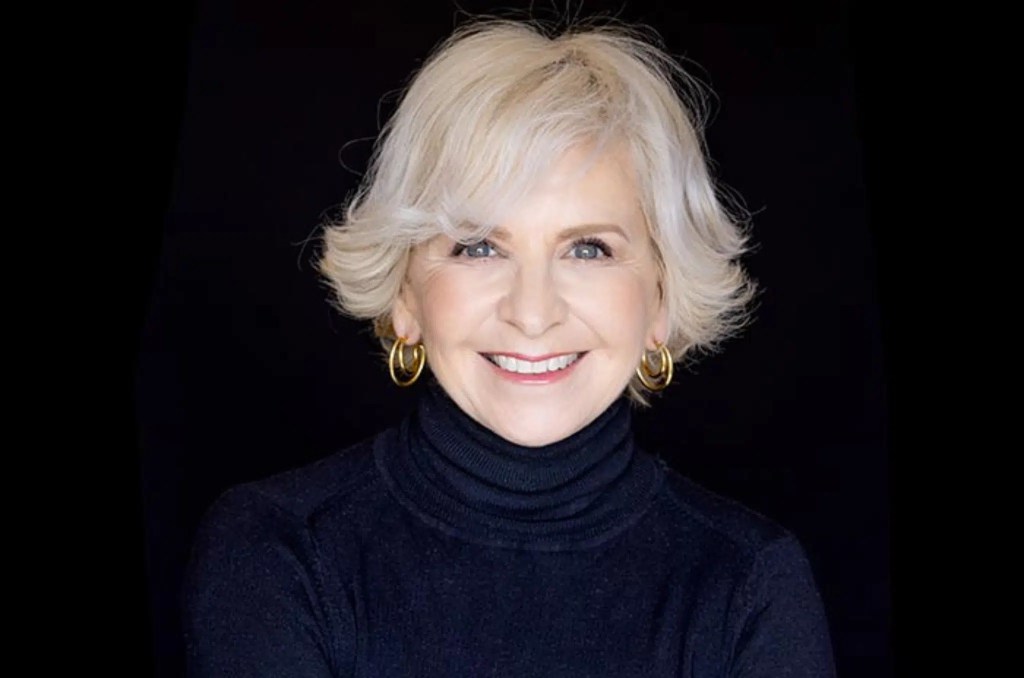
Founded in 1954 by Jean-Jacques Guerlain, the Comité Colbert brings together the most prestigious French luxury houses. Its objective is to promote luxury and the French art de vivre on a global scale, by defending artisanal know-how and supporting contemporary creation. The Committee represents emblematic houses in various fields such as couture, jewelry, gastronomy, and decorative arts. It plays a key role in promoting France’s cultural and economic heritage. Bénédicte Epinay has been the general delegate of the Comité Colbert since 2020.
- You come from journalism, a field in which you evolved for nearly 30 years, specializing on economic subjects and those linked to French luxury. What have been the major évolutions in the French luxury industry since the creation of the committee?
{B.E.}: This is an interesting question, especially since this year we are celebrating the 70th anniversary of the Comité Colbert and on this occasion, we are retracing the major periods of this industry since the birth of our association. One of the first missions of the Colbert Committee was precisely to promote this sector as a provider of jobs and as a leading player within the French economy, particularly its external balance. Because for a long time, as a quote from Georges Pompidou demonstrates, the luxury sector was considered to be frivolous. It must be recognized that until the 1970s, luxury houses were weakly internationalized and mainly family-owned.
Despite ancient roots dating back to the 17th century, French luxury as we know it today, powerful and with a global footprint, was structured only recently at the end of the 1980s through a succession of mergers and acquisitions giving birth to the French giants. The very use of the term “luxury industry” dates back to a McKinsey study commissioned by the Colbert Committee in the mid-1990s. It recognizes the successful transformation of family owned companies that were able to internalize and to expand their distribution worldwide while preserving and diversifying their original know-how. Those are inspiring stories for the next generations of students. Today, we are at the last stage of internalization which consists of these groups buying out their suppliers. Very often to ensure its sustainability.
The other major trend of the last twenty years was the adoption of e-commerce, initially in a somewhat constrained manner until the Covid period during which the acceleration was so strong that some might have thought that brick and mortar businesses were dead. Today, the store has regained its place while maintaining its achievements in terms of online commerce.
The Comité Colbert, just like the industry, has been involved in sustainable development since the early 2000s. For more than 20 years, we have organized meetings to exchange best practices so that companies and sectors can inspire each other. In 2008, the Vigeo Eiris rating agency helped us understand the intrinsic sustainable values of this sector; in particular around the notions of aesthetics and quality. When I arrived in 2020, awareness and actions accelerated very sharply. Not only has the sector been very voluntary, but today everything is pushing economic players in this direction: consumers, investors, employees and even legislators. The time is no longer to know whether we should take action or not, but to be held accountable. Our CSR reports are there to bear witness to this.
Seventy years after the creation of the Colbert Committee, the luxury sector stands out today as one of the spearheads of the French economy, highlighted as such by political leaders. So much so that other sectors are now seeking inspiration from it. But it must be admitted that the success of the model developed by French luxury is difficult to apply to others because luxury goods carry a part of intangible assets that other products don’t have.
- Why did you accept this mission as Managing Director of the Comité Colbert? Could you look back over the last four years. What were the challenges and successes?
{B.E.}: I think that if the board of the Comité Colbert was looking for a profile such as mine, coming from information and communication, it is because they wanted to give more visibility to their work.
My first mission was to gather all of our members around shared objectives. This “raison d’être” is as follows: “To promote passionately, develop sustainably, patiently transmit French know-how and creation to inspire dreams”. It now guides all our daily actions.
We then equipped the Colbert committee with digital communication tools, starting with a modernized and chatty website. We developed the Committee’s presence on social networks, LinkedIn and Instagram, then restarted study work in order to provide our members with relevant analyses. With one objective in mind: to be useful to each of our houses whatever their sector and their size with this certainty that the Colbert Committee is probably more valuable to the smallest of them, eager for our work, our studies and our meetings. Thirdly, we wanted to speak collectively on different subjects. We have already published three reports on CSR and have initiated a cycle of studies with Bain on luxury and technology, the third opus of which will be released in September on artificial intelligence and its challenges for the luxury sector. Both with regard to analytical AI and generative AI.
We have also decided to accelerate our mobilization in terms of sustainability. This is why we participated in UNESCO’s Earth University as speakers. It was a first and a real challenge for us who didn’t know if the activists present in the room would find it strange that luxury was speaking out about this type of matter. Our fears were quickly swept aside to the point of even generating applause. Our posture was to arrive with a form of humility consisting of admitting that we are not perfect but that we do not shy away from the challenge. Things are moving forward and our words are useful in the debate.
As soon as I arrived, we also resumed the program to promote our industry abroad in a logic of cultural diplomacy. For example, in November we are organizing an exhibition in China on the occasion of the celebration of 60 years of our diplomatic relations with China. It is an event certified by the French Embassy within the framework of which we bring dozens of French artisans from our houses for demonstrations of know-how. At the same time, exceptional Chinese artisans will come to interact with ours. At a time when the Chinese economy seems to be seizing up, it is interesting to address this market with a more cultural and more diplomatic discourse on gestures and the beauty of things.
Last but not least, our involvement in the recruitment of a new generation of craftsmen is absolutely urgent and crucial. All our members are in a form of urgency to attract new talents, facing the risk of losing their know-how. Every year, the sector struggles to compensate for retirements, thus creating a form of deficit. Today it is estimated that there is a shortage of around 20,000 hands, just to meet the need for this renewal of the age pyramid. Manual skills have no difficulty recruiting adults undergoing a career change who find meaning in moving towards these professions, but the sector, on the other hand, struggles to attract young people. However, it takes five to ten years to train a jeweler or leatherworker. There is therefore a form of emergency. This is why we created an event called Les De(ux)mains du Luxe (pun on tomorrow and the two hands of the artisan). The event takes the form of a gigantic creative workshop. That is to say that the visitor, whatever their age, will be able to test their agility on different know-how of our houses, saddle stitching at Hermès, gem-setting at Cartier, drawing at Van Cleef & Arpels or Leonardo, the carving of a glass at Baccarat. The objective is clearly to awaken vocations. The third edition has just been held in Lyon, the fourth will take place in Cholet in November. Each edition welcomed nearly 8,000 visitors over four days.
- Are you actively looking for new members for the Comité Colbert?
{B.E.}: We receive a lot of applications of all kinds and many are not accepted. We have no objective in this area and remain with a fairly orthodox vision of a luxury house. To do this, we rely on very clear objective and subjective criteria, as mentioned in our status. Among the objective criteria, the house, with a worldwide reputation, must have been founded in France and clearly claim to belong to the world of luxury. We are very keen on the use of the word luxury for which we fought a lot in Brussels, particularly within the European Cultural and Creative Industries Alliance (ECCIA): neither the Germans nor the Italians use this term, preferring “high-end”. But we want to maintain this notion of luxury, considering that it is indeed a French exception. Especially since it is for this reason that the sector benefits from an exemption to carry out selective distribution and thus choose the stores in which the products are sold. We also want the house to already have a truly international reputation. Today, all of our members generate more than 80% of their sales from exports.
- A certain number of professions essential to luxury houses are under pressure. What are the reasons why some houses have difficulty recruiting?
{B.E.}: There are many reasons for this. The first reason is the invisibility of these professions. You can’t want to do a job you don’t know. In 3rd grade, that is to say at an age where a student could pursue Youth Training, a young person will only know 5 different professions. It was therefore essential for us to increase the number of events and launch ourselves on Tik Tok with the hashtag #savoirfaire which today peaks at more than 500 million views. Our editorial line consists of meeting young artisans so that they can communicate their passion for their profession. This impressive figure is an extremely positive signal because it shows that when we give voice to young artisans, their testimony interests other young people looking for a profession.
The second reason comes from parents and teachers who are victims of the “get your high school diploma first” syndrome and sometimes keep children in general education, even when they are unhappy there. This is a preconceived idea that must be fought. Youth Training must be upgraded, as it was the case in cooking, for example. This also involves raising awareness among guidance counselors, the last public to inform and convince.
All this explains why today some Youth Training classes are empty…or rather 75% filled with adults undergoing career changes. With the effect of discouraging young people who, understandably, want to be in class with people their own age.
- Raising awareness on CSR issues is an important aspect of the Comité Colbert. It seems that you seek to approach these subjects in a positive manner, where in many sectors these issues are perceived as sources of constraints. What is your approach to this?
{B.E.}: When I arrived, I found a war chest: hundreds of sheets filled out by the companies to explain their actions in terms of CSR. A treasure that we had to exploit and disseminate. The first step was therefore to organize them with a view to publishing a report, which was not easy as our members come from fourteen different sectors of activity. A year after my arrival we published a first CSR report organized around 7 of the 15 sustainable development topics stated by the United Nations. This is a first report, undoubtedly a little technical, but which had the merit of existing for all of our stakeholders to whom it was sent. The following year, I proposed expanding the audience to the general public by creating a magazine distributed with Les Echos. The topic chosen, easier to understand, dealt with the life cycle of products and all the CSR actions undertaken throughout this process from the sourcing of raw materials to sale. We repeated this operation last January, in English this time, in a supplement to the New York Times in order to show the American market, the largest market in our industry, the numerous actions of our sector in this area. The general public often confuses luxury by associating it with the highly polluting fashion sector. The magazine is a very practical and educational tool for getting our messages across.
The exchange of best practices also allowed luxury houses to draw inspiration from the actions carried out by other members. When Chloé, part of the Richemont group, obtained the B Corp label, its managers came to present their approach to the CSR directors and presidents of the other committee members, justifying the choice of this label without hiding the difficulties encountered. Since then, around ten other houses have obtained or are in the process of obtaining the label. It’s a real satisfaction.
We have different commissions within the committee but we also lead networks of Directors (HR, Communication, CSR, Public Affairs) which we bring together very regularly. At the last CSR meeting, the members decided to focus on water stress: It is a subject common to all our companies and on which they wish to find out in order to define the best ways to act. A conference is coming up on this subject in September.
- The sectors from which the committee members come are known to be extremely competitive, sometimes with strong personalities at their head, yet it seems that they manage to find each other when it comes to defending their interests. How to explain this?
{B.E.}: All our houses are in fact competitors but also share a certain number of subjects of general interest. These are the subjects that focus all our attention, starting with the preservation of luxury artisanal know-how which makes up the identity and value of this industry. This is why our houses work in harmony. In addition to the perceived value of each of our houses, the collective consciousness of belonging to luxury and the French Art de Vivre is another motivation to work together. Laurent Boillot, President of Hennessy and Chairman of the Colbert Committee, pointed out to me a few days ago that the Cognac houses, although competing, were all collectively responsible for the future of the cognac appellation. It is the very spirit of the Colbert Committee that has allowed this association to continue to exist despite the global size of some of its members.
- You have a lobbying role with legislators and government authorities. What are the current subjects on that matter ?
{B.E.}: The luxury sector has until now been relatively unregulated with the exception of selective distribution already mentioned earlier and anti-counterfeiting laws. With the project of the President of the European Commission, Ursula Von Der Leyen, to make Europe a carbon neutral continent by 2050, we are faced with a train of more than 150 regulations under discussion. Far be it from us to oppose it but to highlight the specificities of our industry when we believe that they could be threatened.
For example, we narrowly escaped a recently passed law on packaging, the initial terms of which could have been dangerous. The latter aimed to reduce the weight of bottles (of wine, alcohol, perfume, etc.) to reduce their carbon footprint. A project to which we fully support, some of our members having taken the lead in this matter with a voluntary strategy. But the legislator wanted to impose a number of standard shapes and weights, disregarding not only creativity but notions of intellectual property and geographical provenance as well.
 Ink & Voices