
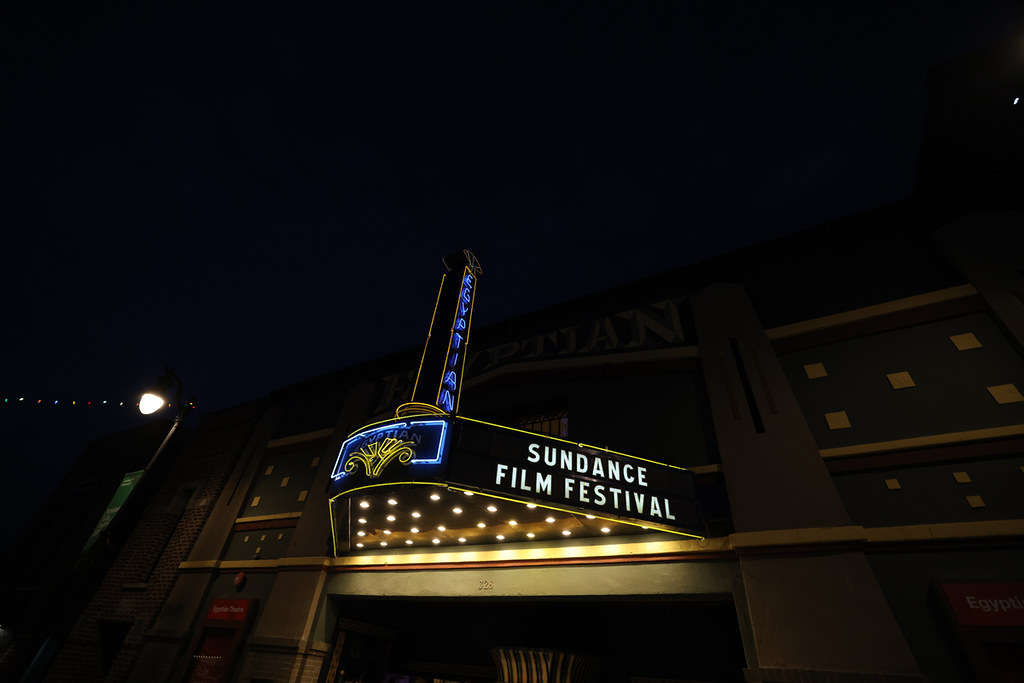
The Sundance Film Festival has unveiled its 2025 prize list in the short films section. From Palestine ( the Flowers Stand Silently, Witnessing by Theo Panagopoulos) to Cambodia (Grandma Nai Who Played Favorites by Chheangkea), via Los Angeles (Trokas Duras by Jazmin Garcia), the award-winning films invite us to explore different realities and cultures by tackling themes such as identity, memory as well as precariousness and the violence of the world we are living in.
The Flowers Stand Silently, Witnessing by Theo Panagopoulos
The short film The Flowers Stand Silently, Witnessing by Theo Panagopoulos wins the Grand Jury Prize at the 2025 Sundance Film Festival and positions itself as a serious candidate for the 2025 BAFTAs.
The Palestinian director’s film is a poignant work which explores the themes of memory, identity and the relationship between man and nature by relying on archive images of wild flowers from Palestine, shot by a Scottish missionary in the 1930s and 1940s. These images, found by chance by the director while doing researches in the Glasgow archives, are reappropriated and used to question the role of images in the construction of history and memory.
The film is a reflection on how images can be used to bear witness, but also to erase and make invisible. It also invites reflection on the relationship between man and nature, and how this relationship is shaped by history and politics. Which will make Theo Panagopoulos say that “This film is an attempt to give a voice back to these flowers, to this land, to this history which have been silenced for so long.”
The Flowers Stand Silently, Witnessing is therefore a film that is both personal and political, which resonates with current events. It testifies to the richness and complexity of Palestinian identity, and offers a profound reflection on memory and history.
Grandma Nai Who Played Favorites by Chheangkea
The film Grandma Nai Who Played Favorites by Cambodian movie director Chheangkea won the jury prize in the international fiction category, a few days before its screening at the Rotterdam International Film Festival.
This touching and humorous film addresses with tenderness and originality the themes of family, transmission, identity and self-acceptance: Grandmother Nai, recently deceased, returns to Earth during All Souls’ Day. She discovers that her grandson Meng, a young gay, is about to marry a woman. Furious at this situation, she decides to do everything to prevent it.
The film is carried by a remarkable performance by the main actress, who embodies the character of Grandmother Nai with accuracy and emotion.
Trokas Duras by Jazmin Garcia
Another first film: that of Jazmin Garcia, Trokas Duras, was awarded the Jury Prize in the American Fiction category. This work, which addresses with sensitivity and poetry the theme of the precarious work of Hispanic day laborers in Los Angeles, has touched the public and the critics. Jazmin Garcia, through careful visual storytelling and an intimate approach, manages to create a strong emotional connection with the characters.
Trokas Duras immerses us in the daily life of these workers, often invisible, who fight for their survival. Beyond the difficulties, the film celebrates the strength and resilience of these men and women, their ability to unite and support each other. The film explores their dreams, their hopes and their struggles.
Como si la tierra se las hubiera tragado by Natalia León
The work of Jazmin Garcia enters into dialogue with that of Natalia León who won the prize in the animated film category. The director is interested in the conditions of her fellow citizens through the eyes of a young woman who returns to her hometown. Her return to her roots is an opportunity for her to reconnect with her past, but also to confront the traumas linked to her childhood. The story is built around her memories, her emotions and her reflections on the violence that surrounds her.
Natalia León’s animation style is both poetic and realistic. The drawings are expressive and the colors are vivid, which reinforces the emotion emanating from the film. The music, composed by Brooklyn-based experimental rock band The Dare, also helps create an immersive atmosphere.
The Eating of an Orange by May Kindred-Boothby
Another award-winning animated film: The Eating of an Orange by May Kindred-Boothby. The film explores themes of conformity and sexuality through slugs, rituals and the eating of an orange. It is made in 2D animation, frame by frame, and painted digitally by hand.
The director, May Kindred-Boothby, is interested in the conventions around gender and sexuality and its impact on the way we interact. The story follows a woman who lives in a world of strict conformity in a universe that is reminiscent of the ideal city of Piero della Francesca and the surrealist universe of Giorgio De Chirico. Her daily life and her certainties are turned upside down when she is transported to another dimension by taking a bite of an orange coming from the limits of the world in which she lives.
Tiger by Loren Waters
The Native American director Loren Waters was rewarded with a special jury prize for her film Tiger. This film tells the story of Dana Tiger, an artist and elder in her project to revive the iconic Tiger t-shirt company. Tiger celebrates the legacy of Dana Tiger, close friend of Loren Waters, as a woman, artist and member of the Cherokee Nation. The film also addresses themes of family, community and resilience in the face of adversity.
We were the scenery by Christopher Radcliff
The jury prize in the Non Fiction category was awarded to a director further from making his first short film: Christopher Radcliff. The Co-Director of The Stranger Ones (2018) returns with a film that follows the daily life of a film crew, in the midst of making a documentary on wolves. Their immersion in nature takes an unexpected turn when the boundaries between reality and fiction blur. The director films the team in a documentary style, playing on the realism of certain sequences. The film crew thus becomes a character in its own right in the film, which creates an interesting « mise en abyme ».
 Ink & Voices